
Preparation
License
To use the ZSvirt Bare Metal Management service, you need to purchase an individual plus license.
Network Planning
Refer to Figure 1 to plan your physical network environment in advance, including the deployment network, IPMI network, management network, and business network.
-
Plan the deployment network.
Make sure the PXE NIC of bare metal chassis connects to the deployment server's (PXE server) DHCP listening NIC through the deployment network.
-
Access the bare metal chassis BIOS to confirm the NIC connecting to the deployment network has PXE enabled.
For some models, make sure the PXE NIC is the first boot NIC or disable PXE on all NICs with higher boot priority.
-
No manual BIOS boot order adjustment is needed (typically HDD boot first). The system will automatically trigger a one-time PXE boot.
-
For high availability, we recommend using independent deployment servers.
-
The deployment server's DHCP listening NIC must be a dedicated NIC with IP address to provide stable DHCP service.
-
Ensure no other DHCP services exist in the deployment network.
-
Plan IP address allocation for each bare metal instance according to your production environment.
-
-
Configure bare metal chassis IPMI and plan IPMI network.
Two configuration scenarios exist:
-
For out-of-band control, ensure each bare metal chassis has BMC interface with pre-configured IPMI address, port, username and password. Plan IPMI network to connect management nodes to BMC interfaces.
-
If devices support BMC ShareLink Management Port, disable it in BIOS to ensure only one IPMI address exists.
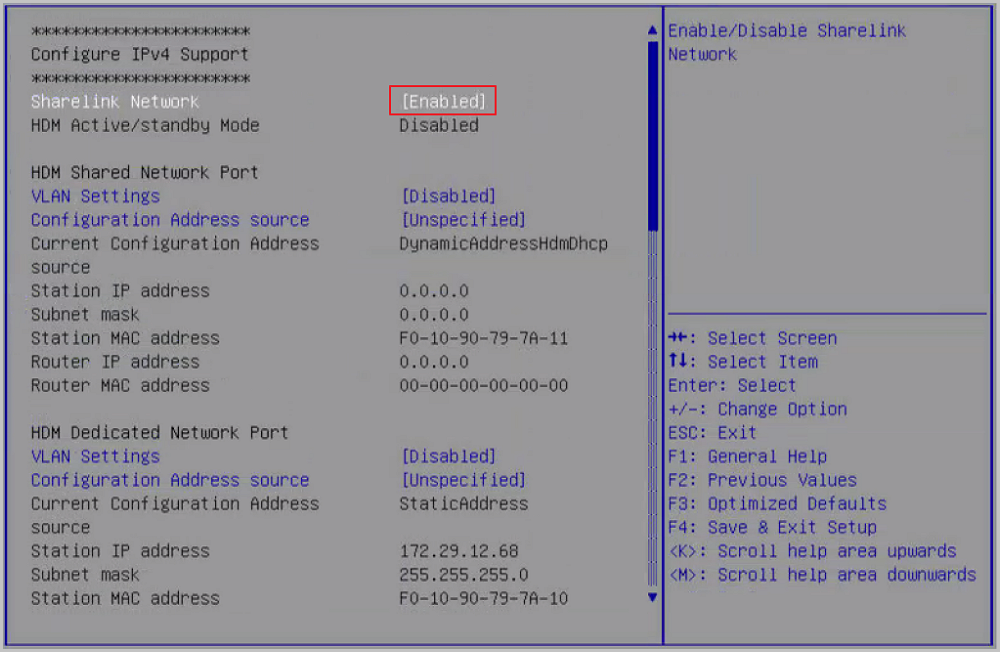
-
-
Plan management and business networks.
- Plan management network to connect image storage and deployment servers to management nodes.
- For bare metal instance business networks, attach distributed switches to the corresponding bare metal cluster in advance.
Software Preparation
Prepare ISO images in the image storage for installing operating systems on bare metal instances.
- The bare metal instance supports both custom platform OS and mainstream Linux distributions, including RHEL/CentOS series, Debian/Ubuntu series, and SUSE/openSUSE series.
- Only ISO format images are supported.